
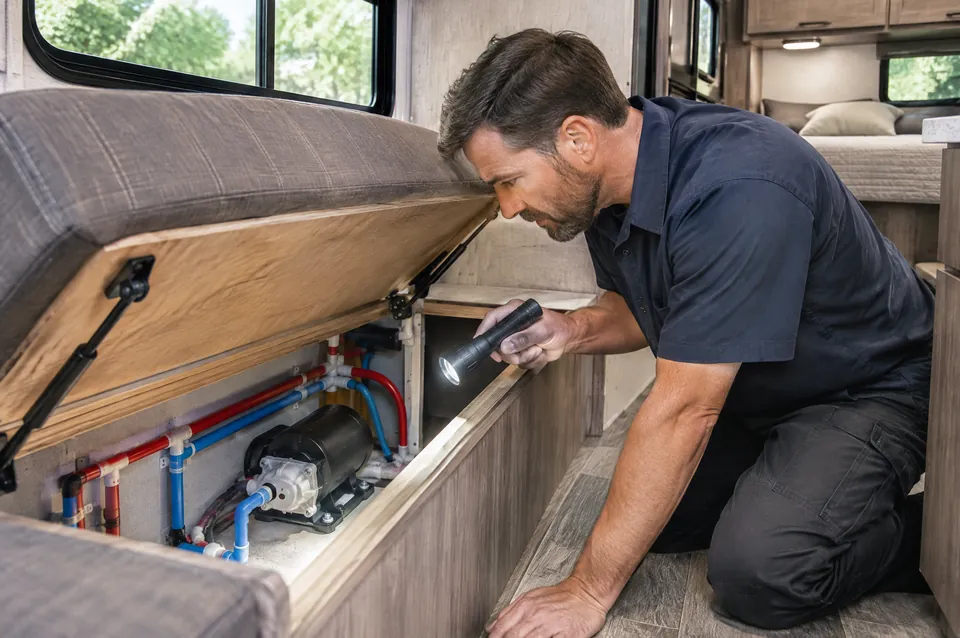
Water and Plumbing
Water pumps, leaks, fittings, water heaters, tanks, valves and sensor problems.
Learn moreServices
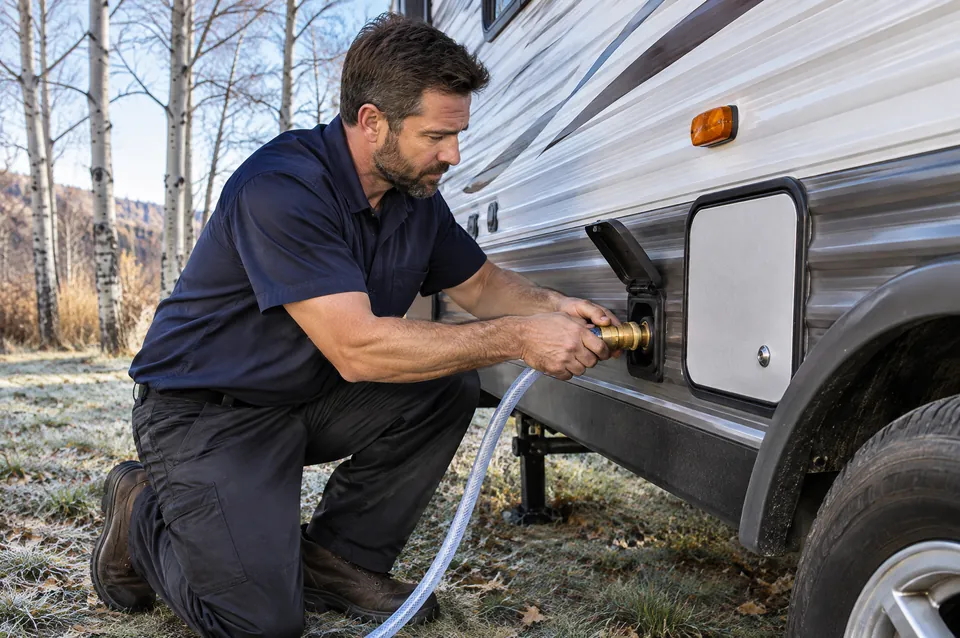
Freeze damage to RV plumbing is expensive and often hidden until spring, when the pump runs and water appears where it should not.
Illustrative image
Signs
Scope
Winterization can include draining tanks and lines, bypassing and draining the water heater, blowing out lines with air and/or adding RV-specific antifreeze, and treating traps. De-winterization reverses the process, flushes antifreeze, checks for leaks and confirms the water heater fills before it is powered.
Winterization reduces freeze risk but does not make an RV usable in sub-freezing weather. Units with washers, ice makers or other add-ons may need manufacturer-specific steps. Existing freeze damage is quoted as a repair.
Before the visit
Diagnosis
At de-winterization, the system is pressurized and checked for drops or visible leaks before normal use. The water heater is filled and checked before any heat source is turned on.
Before repairs begin, you approve the scope. If a part must be ordered or the job needs shop equipment, you are told before any further visit.
Questions
Many owners use both. Air removes most water; antifreeze protects traps and low spots. Your manual may recommend a method.
No. Use only RV-rated, non-toxic plumbing antifreeze in potable water systems.
It can take a lot of antifreeze to fill, and some may remain in the tank. The water heater is flushed thoroughly at de-winterization.
Related
Water pumps, leaks, fittings, water heaters, tanks, valves and sensor problems.
Learn more
A systematic condition check of RV house systems before the season or a long trip.
Learn more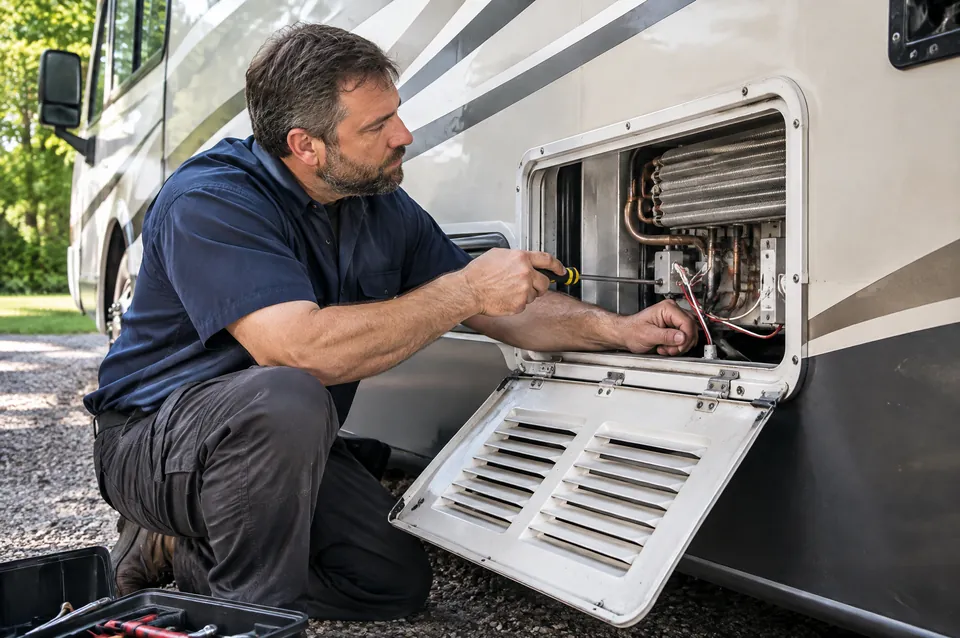
Absorption and residential refrigerators, water heaters, ranges, ovens, microwaves and range hoods.
Learn moreSend the details and your location. We confirm coverage first, then scope.