
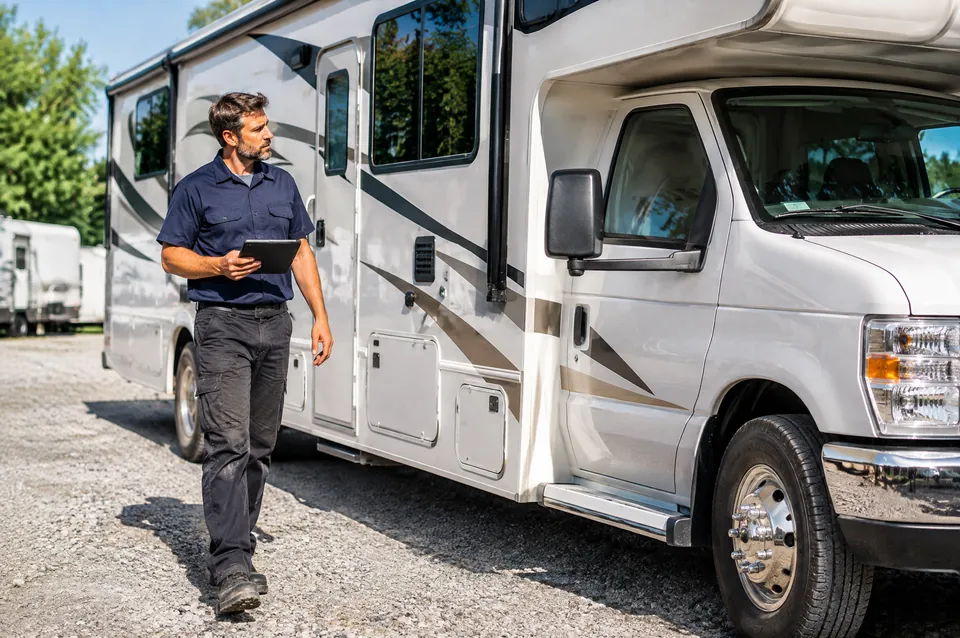
Pre-Trip and Annual Inspections
A systematic condition check of RV house systems before the season or a long trip.
Learn moreServices
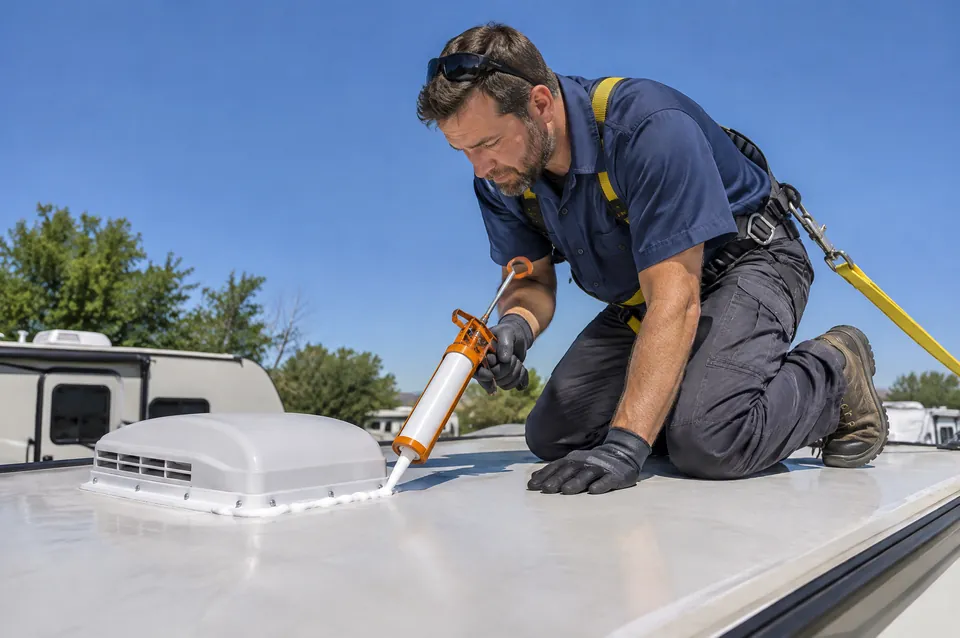
Most RV water damage starts on the roof, where sealant around vents, antennas, skylights and edges breaks down under sun and temperature swings.
Illustrative image
Signs
Scope
Roof work starts with an inspection of the membrane, seams, edge trim, vents, skylights and every penetration. Typical on-site work includes cleaning and resealing with sealant compatible with your roof material, patching small tears and resetting loose fixtures.
Full membrane replacement, rotten decking or structural repair is a larger job that may need a covered shop space. Hidden water damage inside walls cannot always be measured from the outside, and a reseal does not undo damage that has already occurred. Roof work is weather dependent.
Before the visit
Diagnosis
A roof assessment can involve a close visual inspection, checking sealant adhesion by hand, probing for soft decking around fixtures and, where useful, a moisture meter reading on interior walls and ceilings near suspected leaks.
Before repairs begin, you approve the scope. If a part must be ordered or the job needs shop equipment, you are told before any further visit.
Questions
Many manufacturers recommend inspecting roof sealant at least once or twice a year and after hail or long trips. Check your owner manual for the exact interval for your roof type.
Often, by tracing failed sealant and staining back to a likely source. Some leaks only show under specific conditions, so your notes about when it drips matter.
No. Rubber (EPDM), TPO and fiberglass roofs need compatible products. Using the wrong one can cause poor adhesion, so the roof type is confirmed first.
Related
A systematic condition check of RV house systems before the season or a long trip.
Learn more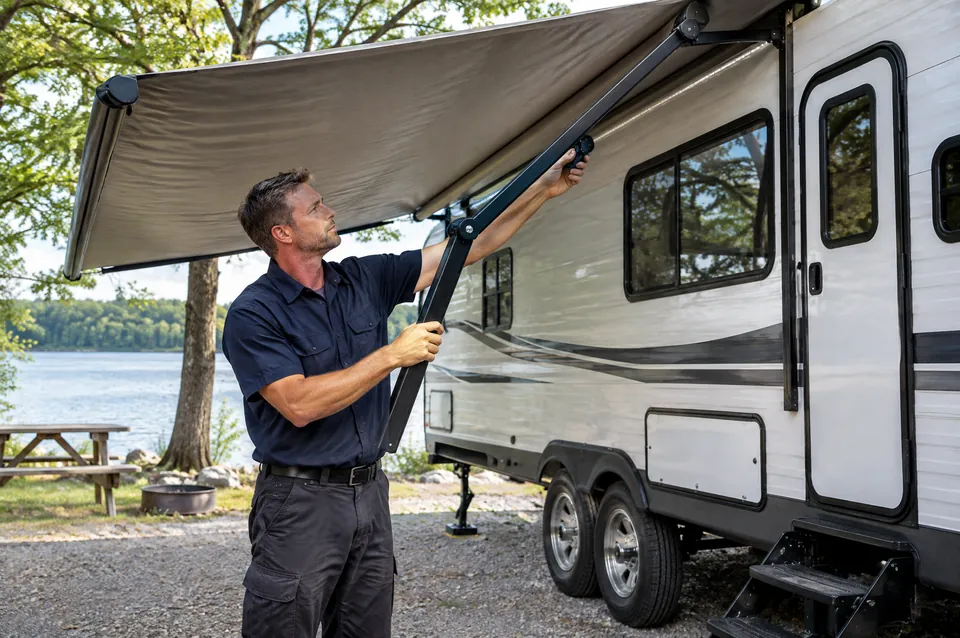
Manual and powered awnings that stick, sag, tear or will not retract.
Learn more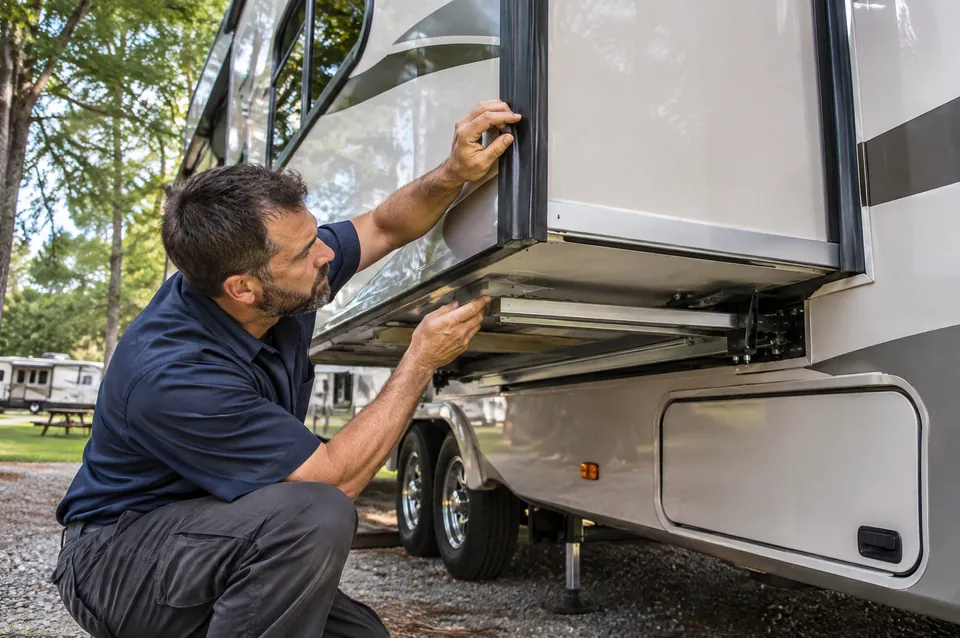
Slide rooms that stall, move unevenly, leak or will not seal, diagnosed at your site.
Learn moreSend the details and your location. We confirm coverage first, then scope.