Generator Service
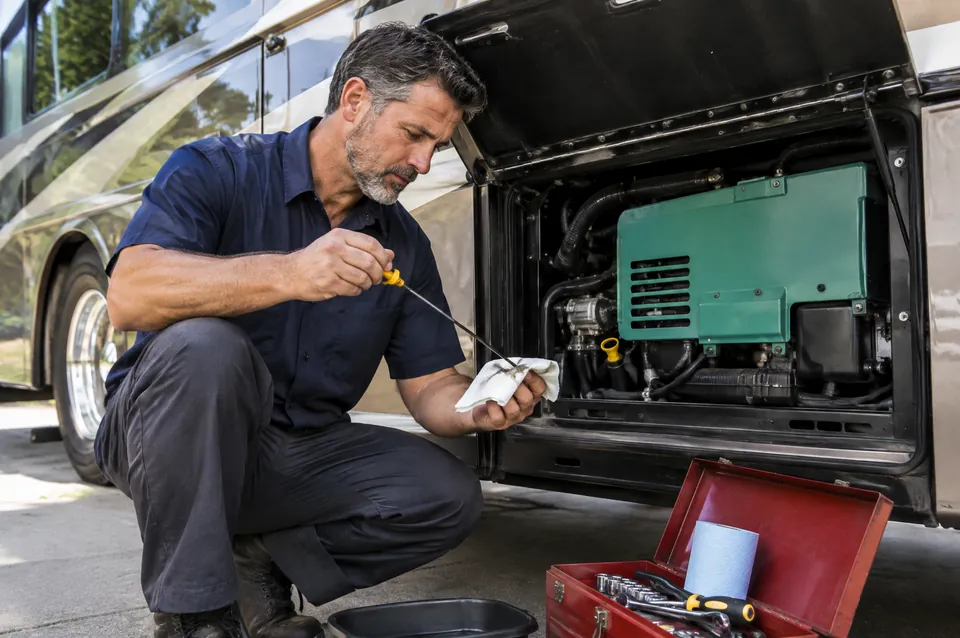
Onboard generator maintenance and diagnosis: starting, surging, shutdown and output faults.
Learn moreServices
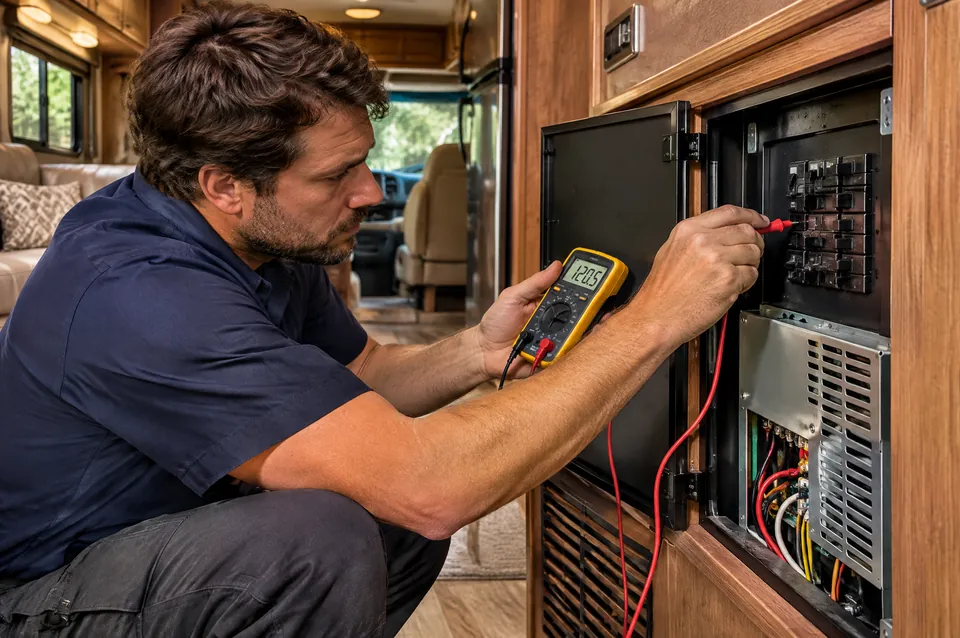
RV electrical problems often look random because two systems overlap: 12-volt DC for lights, pumps and controls, and 120-volt AC for outlets and large appliances.
Illustrative image
Signs
Scope
Electrical diagnosis can cover batteries and connections, converter or charger output, inverters, automatic transfer switches, distribution panels, GFCI circuits, 12-volt fuses and common wiring faults in the house system.
Chassis electrical (engine, headlights, trailer brake controllers in the tow vehicle) is automotive work and outside this service. Campground pedestals and building wiring belong to the property owner. Solar and lithium upgrades are design projects quoted separately, not quick repairs.
Before the visit
Diagnosis
Testing usually follows the power path: supply, transfer switch, panel, breaker, then circuit, using a meter rather than guesswork. On the 12-volt side, voltage drop under load often reveals a corroded or loose connection that a simple voltage reading misses.
Before repairs begin, you approve the scope. If a part must be ordered or the job needs shop equipment, you are told before any further visit.
Questions
Common causes include a transfer switch fault, a tripped pedestal breaker or a damaged cord end. It needs testing rather than guessing.
Adapters can run limited loads but cannot supply full RV demand. Running heavy appliances on an undersized circuit can overheat wiring. Follow your manual and avoid improvised setups.
A load or capacity test plus a charging system check usually shows whether batteries, the charger or a parasitic draw is the real problem.
Related
Onboard generator maintenance and diagnosis: starting, surging, shutdown and output faults.
Learn more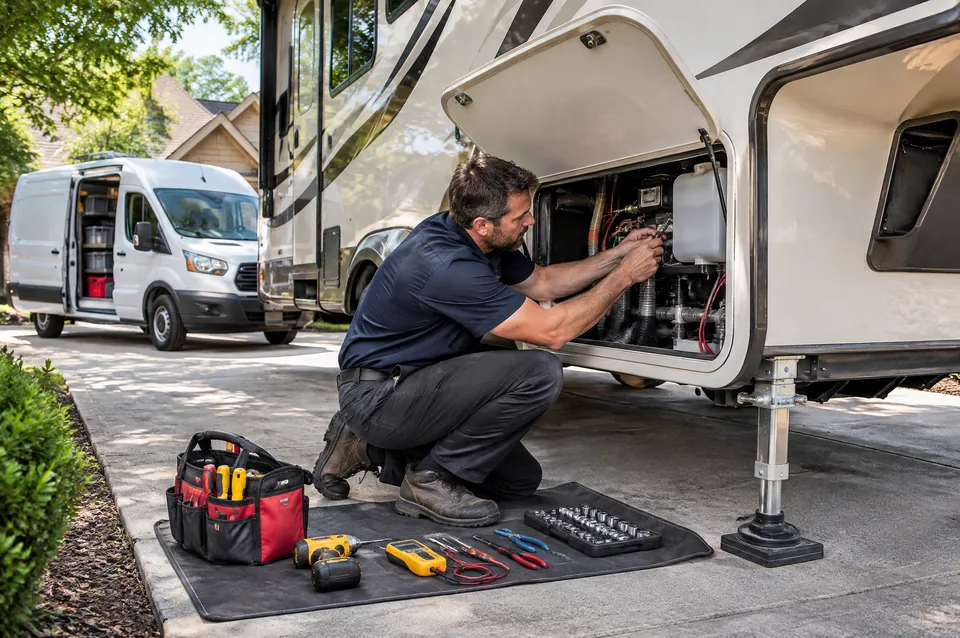
On-location diagnosis and repair of RV house systems, where your coach or trailer is parked.
Learn more
Absorption and residential refrigerators, water heaters, ranges, ovens, microwaves and range hoods.
Learn moreSend the details and your location. We confirm coverage first, then scope.