
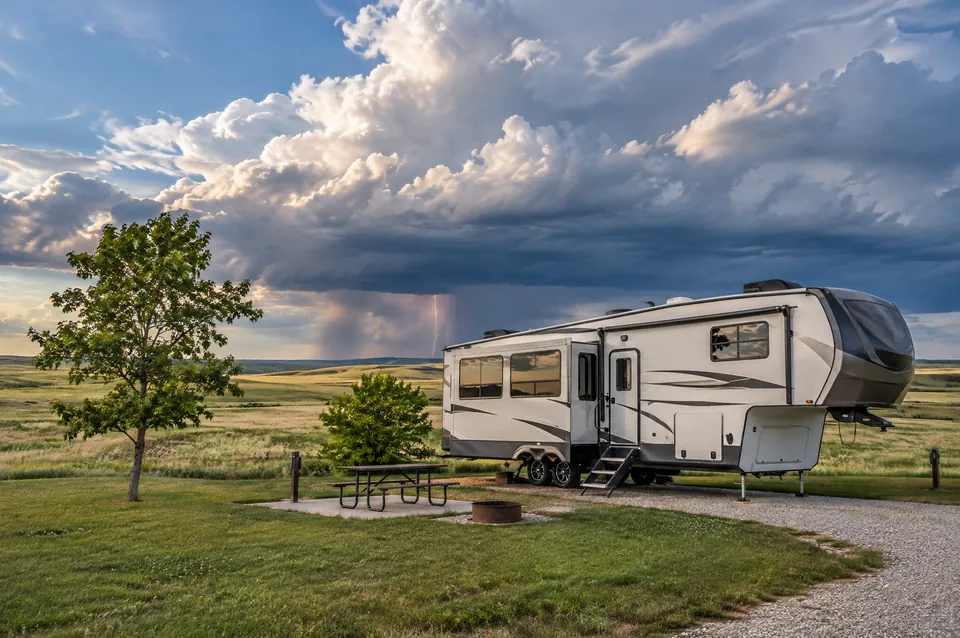
Kansas camping centers on its big federal reservoirs, many with state parks on their shores, plus the open grasslands of the Flint Hills. Interstate 70 carries cross-country RV traffic straight through the middle of the state, often into stiff crosswinds.
Summers are hot and stormy, winters can be bitterly cold, and the change between the two can be abrupt.
Where RVers go
Flint Hills
The largest remaining tallgrass prairie in North America stretches through the east-central part of the state, with wide views and little shelter from wind.
Smoky Hills lakes
Wilson, Kanopolis and Cedar Bluff reservoirs in central and western Kansas offer chalk bluffs, canyons and fishing.
High Plains
In the far west, near the Colorado line, the land is high, dry and dusty, with long distances between services.
Seasonal checks
Crosswinds
Strong gusts across I-70 and open campsites strain awnings, slide toppers and roof vent lids. Keep awnings rolled up whenever you are not under them, and check that toppers and vent covers are secure.
Hail season
Late spring and early summer storms can be severe. After hail, check skylights, vent lids, the AC shroud and any solar panels. Covered storage pays for itself in this state.
Heat and dust
July and August heat pushes air conditioners hard, and dry western roads coat filters and seals with grit. Clean filters often and wipe slide seals before retracting.
State parks
Kanopolis State Park
Kansas's first state park, on Kanopolis Lake south of Ellsworth, with sandstone canyons and bluffs. Open, breezy sites mean awning care matters.
Wilson State Park
On Wilson Lake in the Smoky Hills, known for clear water and rugged shoreline. Confirm current camping details with Kansas State Parks before you go.
Registration
The Kansas Department of Revenue's Division of Vehicles oversees titles and tags. The rules for a motorhome or trailer can change with vehicle type and weight, so check the Division of Vehicles site for what is current.
Local questions
How do I protect my RV from Kansas wind?
Retract awnings and secure slide toppers, park nose into the wind when possible, and avoid extending slides in severe gusts. Afterward, check vent lids and roof edges.
What should I do if hail is forecast?
If you cannot move the RV under cover, close vent lids, retract awnings and slides, and inspect the roof as soon as it is safe.
Does western Kansas dust affect RV systems?
Yes. It loads AC and furnace filters and wears slide seals. Clean them after dusty trips.
Sources
Last reviewed November 2026. How we research these pages.